
Business Details
Expert Biomechanical Engineering & Human Factors Analysis in Seattle
Guidance Engineering is a scientific engineering firm specializing in biomechanical engineering and human factors analyses. Our team of highly qualified professionals leverages extensive technical knowledge to deliver comprehensive, scientifically grounded insights for product development, accident investigations, and injury causation studies. We prioritize a detail-oriented, data-driven approach, combining multi-disciplinary expertise to address complex challenges faced by public, private, and industry organizations nationwide.Our commitment to clarity ensures that even the most intricate scientific findings are presented in an accessible manner, empowering clients to make informed decisions. With experience spanning recreational sports, transportation, maritime, hospitality, and construction industries, we provide tailored solutions that align with the unique demands of each project.

Services
Accident Reconstruction
Injury Analysis
Slip Resistance Testing
3D Modeling
Product Testing
Motion Capture
Visibility Analysis
Human Factors Research
Laser Scanning
User Studies
Highlights and features
- We combine biomechanical and engineering expertise with human factors analysis for holistic solutions.
- Our team holds advanced degrees and professional engineering certifications.
- We present complex scientific findings in clear, courtroom-ready formats.
- Our work spans forensic investigations, product development, and safety research.
- We utilize advanced tools like 3D modeling, motion capture, and virtual simulations.
What people say
Technical expertise
Clear communication
Thorough investigations
Courtroom-ready analysis
Scientific rigor
Services
Biomechanical Engineering
Our biomechanical engineers analyze injury mechanisms using laboratory testing, computer modeling, and field data. We assess accident forces, evaluate safety devices, and determine injury consistency with reported events. This service supports forensic investigations, product design improvements, and litigation cases across transportation, sports, and industrial sectors.
Human Factors Analysis
We study human-environment interactions to improve safety and performance. Our experts evaluate reaction times, warning effectiveness, and visibility factors in accident scenarios. This service helps clients understand behavioral contributors to incidents involving vehicles, consumer products, and workplace environments through scientific methodologies.
Accident Reconstruction
Using motion capture, laser scanning, and virtual simulations, we reconstruct accidents to determine causation. Our team combines physical evidence with computational models to analyze vehicle collisions, slips/trips, and recreational equipment failures, providing expert testimony and technical reports for legal and safety improvement purposes.
Product Testing
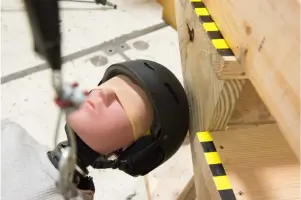
We conduct laboratory and field testing to assess product performance and safety compliance. This includes evaluating helmets, protective gear, and consumer products using standardized protocols. Our findings help manufacturers improve designs, meet regulatory requirements, and reduce liability risks through evidence-based recommendations.
Motion Capture
Our motion capture systems track human movement patterns to study biomechanics and ergonomics. This technology supports accident reconstruction, product testing, and human factors research by quantifying motion dynamics. Applications include sports injury prevention, workplace safety assessments, and equipment design optimization.
People
Irving S. Scher
Principal, Biomechanical Engineer
Dr. Scher specializes in biomechanics and accident reconstruction with over 25 years of experience. His expertise includes injury mechanisms, sports safety, and forensic engineering analysis for legal cases.
Lenka L. Stepan
Principal Biomechanics Consultant
Dr. Stepan focuses on injury biomechanics and product safety evaluation. She has extensive experience in transportation and industrial accident analysis using computational modeling and experimental testing.
Nicholas Yang
Senior Biomechanical Engineer
Dr. Yang specializes in traumatic brain injury research and vehicle occupant safety. His work combines computational modeling with physical testing to evaluate injury risks in automotive and sports contexts.
Robyn Brinkerhoff
Senior Human Factors Scientist
Dr. Brinkerhoff studies human behavior in accident scenarios, focusing on visibility, warning effectiveness, and pedestrian safety. She has testified as an expert witness in numerous legal cases.
Jasper E. Shealy
Science Overlord
Dr. Shealy, a pioneer in sports injury biomechanics, provides strategic oversight for research initiatives. His expertise spans ski safety, helmet performance, and risk assessment methodologies.
Questions
What industries do you serve?
We work with transportation, sports equipment manufacturers, legal firms, insurance companies, and safety organizations nationwide.
How do you analyze slip and fall accidents?
We use slip resistance testing, motion capture, and scene reconstruction to determine causation factors and safety compliance.
Can you explain biomechanical injury mechanisms?
We analyze forces and motions during accidents to determine how injuries occurred and their consistency with reported events.
What testing capabilities do you have?
Our lab features motion capture systems, laser scanning, 3D modeling, and virtual simulation tools for comprehensive analysis.
How do human factors affect accident investigations?
We assess visibility, reaction times, and warning effectiveness to understand behavioral contributors to incidents.